


Canada wildfire smoke to spread across the US - here’s what to expect
Canada wildfire smoke to spread across the US - here’s what to expect

Erin KellerWed, July 15, 2026 at 1:56 PM UTC
4
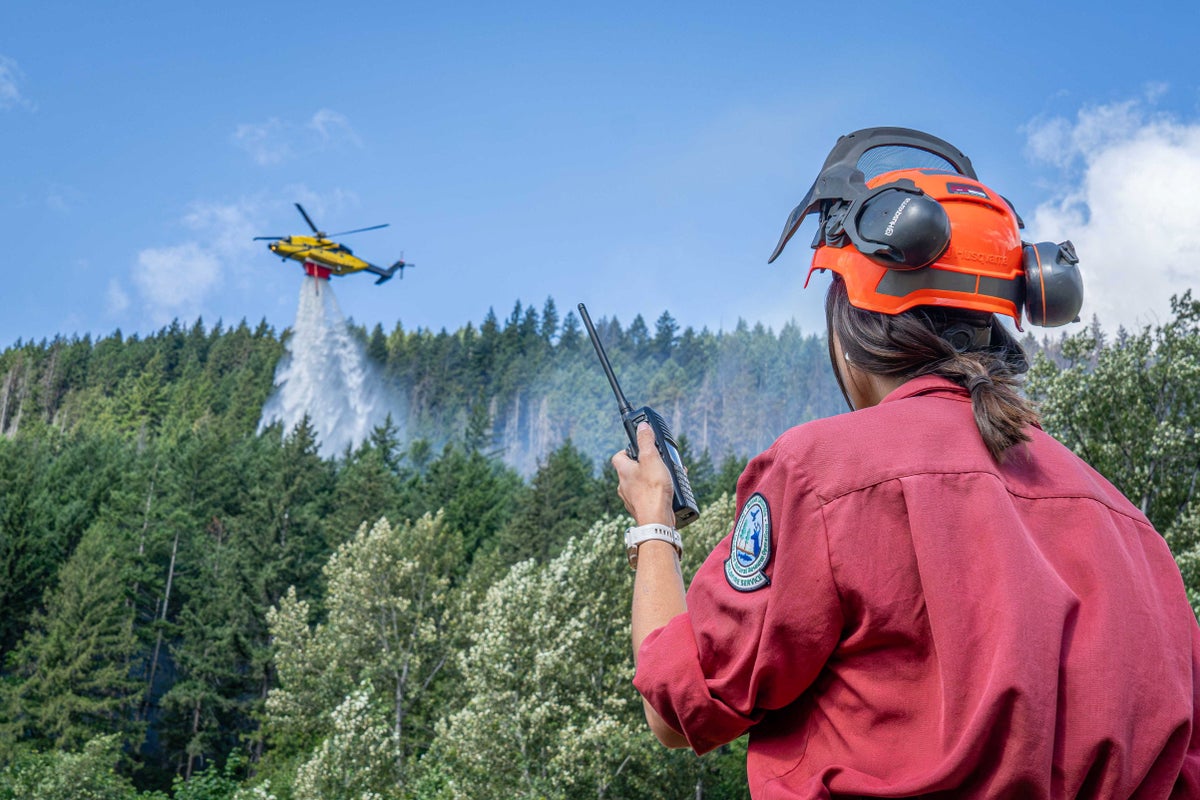
The forecast map shows wildfire smoke from Canada spreading across the U.S. and southern Canada Wednesday morning, with the heaviest concentrations expected around the Great Lakes and Northeast (EPA AirNow)
The Independent and Yahoo will earn a commission from purchases made via links in this article. Pricing and availability are subject to change.
Millions of Americans could see hazy skies and worsening air quality over the next few days as smoke from hundreds of wildfires burning across Canada spreads across the Midwest, Great Lakes and Northeast.
More than 830 wildfires were burning across Canada as of Wednesday, with some of the largest blazes in west-central Ontario sending thick plumes of smoke south into the United States, according to ABC News.
The smoke will first impact the Upper Midwest before expanding east into the Great Lakes, Ohio Valley, Mid-Atlantic and Northeast through Thursday, according to the National Oceanic and Atmospheric Administration. Around 100 million people in the U.S. could experience at least some effects, though conditions will vary by location.
The thickest smoke is expected to affect Minnesota, Wisconsin and Michigan on Wednesday before spreading into New York state and New England by midday. By evening, cities including New York City, Boston, Buffalo, Philadelphia, Detroit, Milwaukee and Green Bay could see hazy skies and reduced air quality.
Conditions are expected to worsen Thursday as the smoke pushes farther south and east, bringing heavy smoke to Cleveland, Columbus, Baltimore and Washington D.C.
Advertisement
Yellow areas on the EPA AirNow map, above, show lighter smoke concentrations stretching from the northern Plains through the Midwest, Ohio Valley, Mid-Atlantic and Northeast. Orange and red areas indicate heavier smoke across parts of Minnesota, Wisconsin, Michigan, southern Ontario, upstate New York and New England, while purple marks the highest concentrations near eastern Upper Michigan and western Lake Huron.
While forecasters say New York City is not expected to experience a repeat of the dramatic orange skies seen during the historic Canadian wildfire smoke event in June 2023, residents can still expect hazy conditions and unhealthy air quality, the New York City Emergency Management Department said in a statement Tuesday.
In parts of the Upper Midwest, where smoke concentrations are expected to be highest, conditions could become severe enough to create "Mars-like" skies, a strong campfire smell and air quality considered unhealthy for everyone, not just those with respiratory conditions.
“To protect the health of New Yorkers, especially those at greatest risk, free KN95 masks are available at public library branches across the five boroughs,“ the statement read.
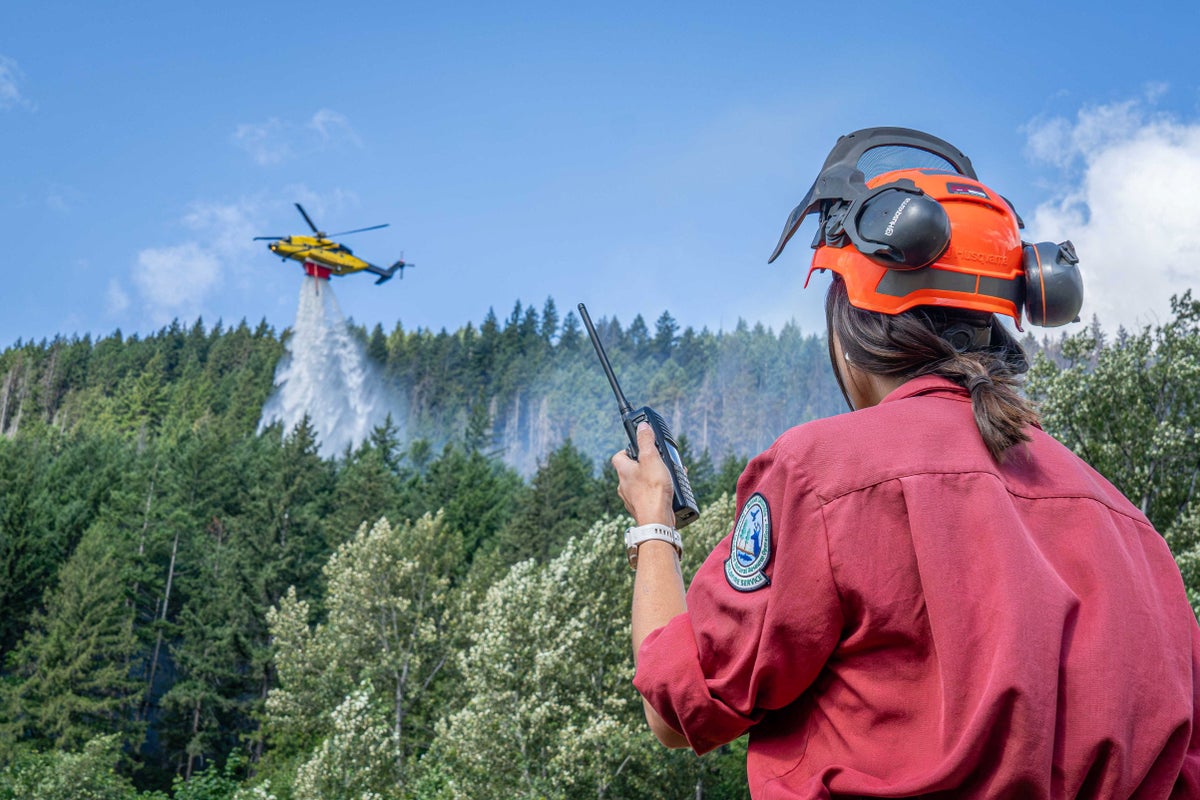
More than 830 wildfires were burning across Canada on Wednesday, sending thick smoke from major blazes in Ontario into the U.S. Pictured is the Brunswick Complex wildfire near North Bend, British Columbia, on Sunday (Reuters)
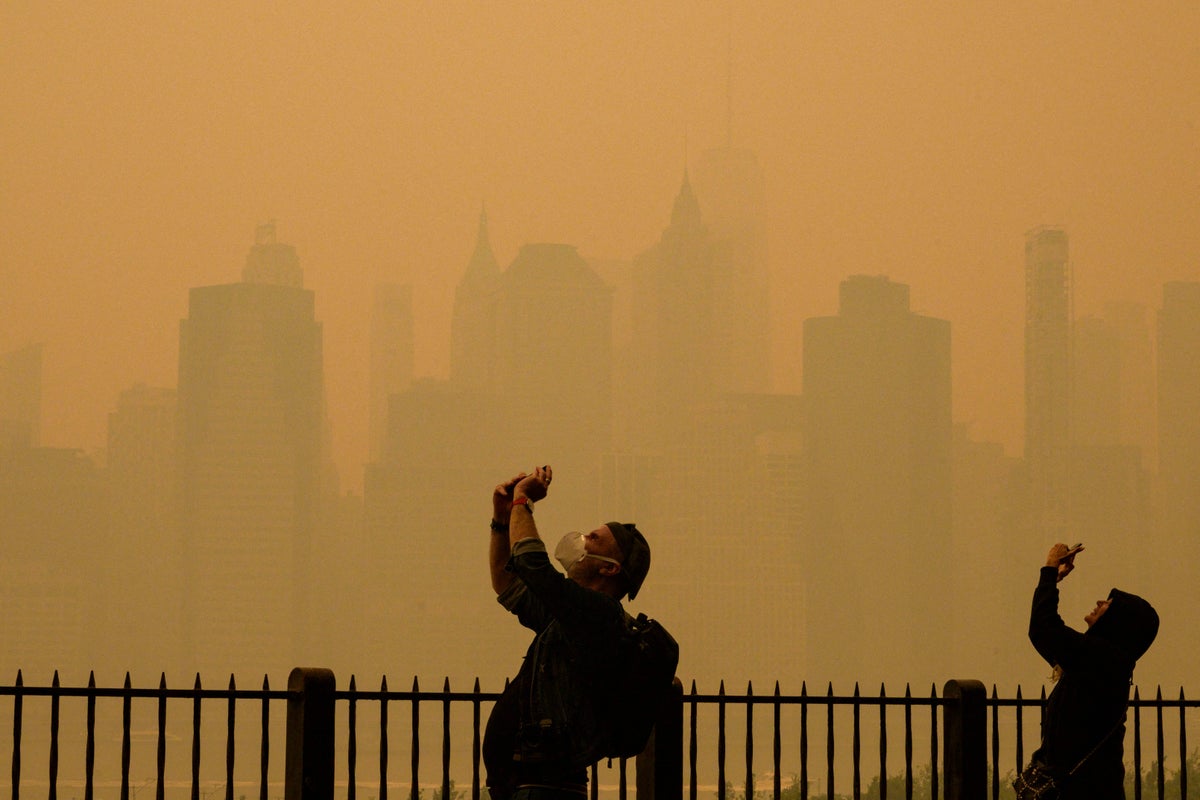
New York City isn't expected to see a repeat of the orange skies from June 2023, pictured here, but should still prepare for hazy skies and unhealthy air quality (AFP/Getty)
Air quality alerts have already been issued from Minnesota to New York, including the entire states of Wisconsin and Michigan. Relief is expected later this week, with rain forecast to move through the Upper Midwest on Friday and the Northeast on Saturday, helping disperse the smoke.
Health officials recommend that children, older adults, pregnant people and anyone with asthma, heart disease or other respiratory conditions limit prolonged outdoor activity if air quality worsens.
Residents are also encouraged to keep windows closed when smoke is heavy, run air conditioning on recirculate if possible and check local Air Quality Index forecasts before spending extended time outdoors.
Source: “AOL Breaking”
