


CNBC Anchor Issues Dire Stock Market Warning: “I Can Assure You… We Will Have a Crash”
CNBC Anchor Issues Dire Stock Market Warning: “I Can Assure You… We Will Have a Crash”
Omor Ibne Ehsan Sun, September 6, 2026 at 1:06 AM UTC
0
Michael M. Santiago / Getty Images News via Getty ImagesQuick Read -
Sorkin flatly states a crash is inevitable, warning that market confidence can vanish instantly and no one can predict the timing or depth.
Sorkin compares today's market to 1929, calling the AI boom either a 'gold rush or a sugar rush' with no clarity expected for years.
The S&P 500's PE ratio sits at 29x, near Dot Com Bubble peaks, making exposure to defensive assets worth considering alongside staying in the rally.
Just released. Our analysts combed the entire stock market and named the ten best stocks to buy right now. The report is free. Enter your email and see if any of your stocks made the cut.
The bears have been largely silent in the last two years, even as the market has grown considerably more frothy by their standards. And at this point, who would want the permabear label while the rest of the market keeps climbing? Andrew Ross Sorkin has stepped into that role, and his arguments deserve a serious hearing. Very few voices are still willing to talk about AI valuations after being proven wrong for three consecutive years.
This is not just any bear. Sorkin spent more than eight years researching his book, titled "1929: Inside the Greatest Crash in Wall Street History and How It Shattered a Nation," published in October 2025 by Viking Press. The book became a number-one New York Times bestseller and landed on Barack Obama's list of his favorite books of 2025. Sorkin has also spent two decades covering markets as a journalist for The New York Times, co-anchors Squawk Box on CNBC, founded DealBook, and wrote "Too Big to Fail," his acclaimed account of the 2008 financial crisis that was later adapted into an HBO film.
Free Report, Just Released
The Top 10 Stocks To Buy Now
24/7 Wall St has helped investors make money for over two decades, and our top analysts just finished ranking the definitive Top 10 Stocks To Buy Now. Not the ten biggest companies. Not the ten everyone is arguing about. The ten best stocks to buy right now.
The report is free, and you can see why we think each stock is a top investment today.
Enter Your Email and See the Ten →
Will history repeat itself... under Trump?
One of the most popular arguments for the rally continuing is that "Trump will never let this happen!" It is hard to disagree entirely with that framing. Trump could contact Kevin Warsh, or deploy other executive tools to inject liquidity into the market. That is not an instant antidote to a crash, but it is a mechanism for passing the pain forward. Newly printed money typically takes around 24 months to fully filter through into inflation, so the timing of any such intervention matters enormously.
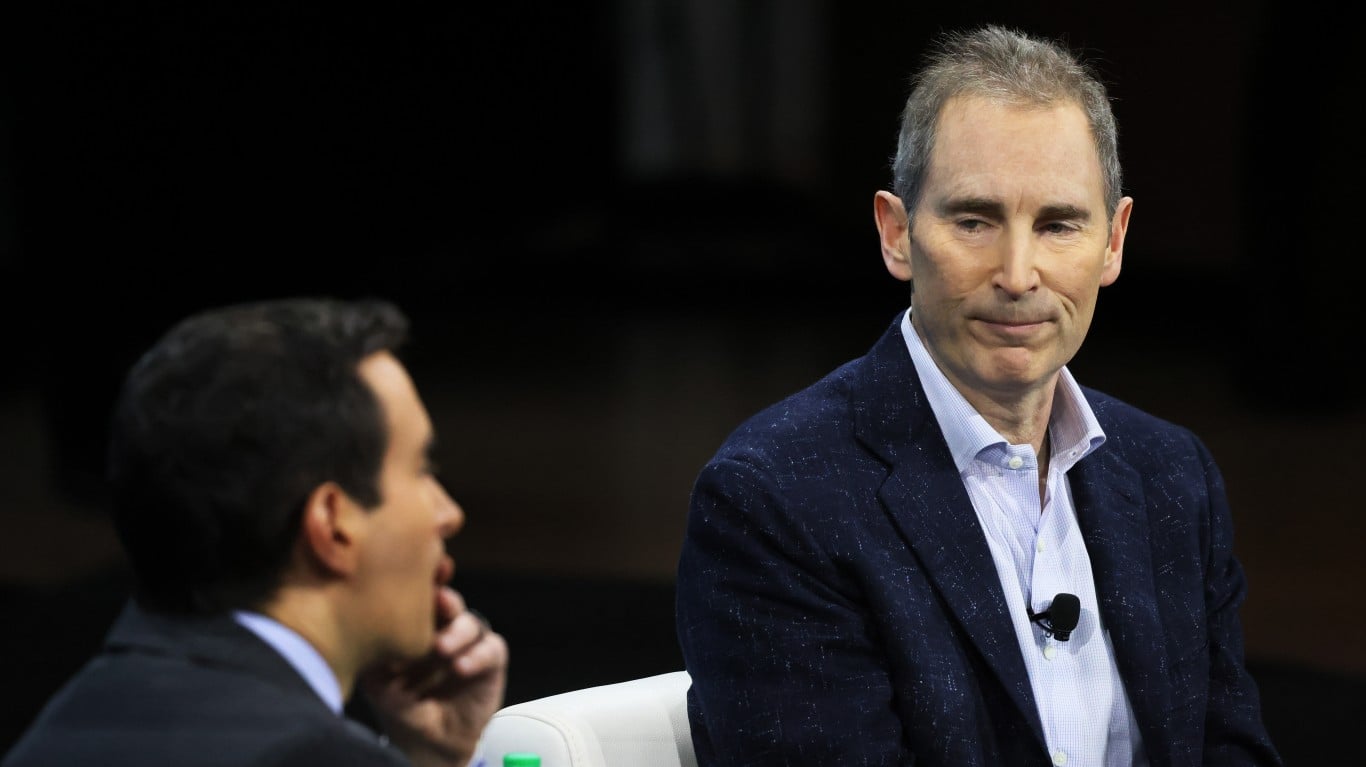
When the host raised this possibility, Sorkin replied, "I think it's hard to know how things get out of control. When confidence disappears, it happens like this," snapping his fingers.
He then added: "We will have a crash, I just can't tell you when, and I can't tell you how deep. But I can assure you, unfortunately, I wish I wasn't saying this, we will have a crash."
A new roaring twenties?
Sorkin draws a direct parallel to the period that preceded the 1929 collapse. "The crazy part about this," he said, "is from 1928 to September of 1929, the stock market was up 90%." That comparison becomes harder to dismiss when you consider the AI-fueled gains of the past several years.
Advertisement
The host pressed him directly: "When you say the stock market was way up, immediately, I think of now. Are you scared?" Sorkin replied that he is anxious about prices "that may not feel sustainable," adding that the market is "either living through some kind of remarkable boom due to artificial intelligence, technology... or, everything is overpriced, like in 1929."
He put the central dilemma plainly: "I would argue that the economy is being propped up, almost artificially, by the artificial intelligence boom. This is either a gold rush or a sugar rush, and we probably won't know for a couple of years which one it is." That is the question investors in 1929 never got to answer before the bottom fell out.
Sorkin places the blame on Trump
Sorkin pointed to the rollback of financial guardrails as a key structural risk. "The Consumer Protection Bureau practically doesn't exist anymore," he said, and "there is an increasing amount of debt in the market today, happening against the backdrop of the guardrails coming off." He also raised transparency concerns about the growing role of private markets, noting that public companies face disclosure requirements under SEC rules while private companies do not.
Those private companies created serious problems in the lead-up to the 1929 crash, and Sorkin argues history is rhyming again. He said there has been a "real push" by the industry and the Trump administration to channel more money into private markets. He also observed that CEOs "are so nervous about criticizing anything that's going on with this administration," which he views as its own warning signal: when corporate leaders stop speaking honestly about risk, the market loses one of its key self-correcting mechanisms.
Playing the devil's advocate
Every informed investor knows a crash will come someday. That does not mean the right response is to abandon the rally and forfeit gains in the interim. The Strait of Hormuz has been effectively closed to commercial shipping since late February 2026, with a brief partial reopening in mid-June that collapsed in early July after fresh attacks on commercial vessels. As of early September 2026, daily transits remain a fraction of the pre-crisis baseline of roughly 85 ships per day. That kind of shock would have been considered catastrophic, yet broader equity markets have absorbed it with notable resilience.
Tariff fears earlier in 2026 similarly threatened a spiral into double-digit inflation, but proved overblown. The administration walked back portions of those tariffs, and the worst inflation scenarios did not materialize. The market has a proven track record of absorbing political shocks that looked fatal on paper.
Still, Sorkin's warning deserves attention. The S&P 500's trailing price-to-earnings ratio sits at approximately 29x, roughly where it stood as the Dot Com Bubble was beginning to burst. Maintaining a portion of a portfolio in defensive assets is a reasonable hedge for anyone who finds the current valuation environment uncomfortable, even for those who remain fully engaged in the rally.
Editor's note: This article was to reflect that Sorkin's book "1929" took more than eight years to research, was published in October 2025, and became a number-one New York Times bestseller; the S&P 500 trailing P/E ratio was to approximately 29x as of early September 2026; and the Strait of Hormuz section was revised to note the strait has been effectively closed to commercial shipping since late February 2026, with a brief reopening in mid-June that collapsed in early July.
Got $1,000? Read This Before You Buy Another Stock
If you have cash sitting in your account right now, give this two minutes. After more than two decades of helping investors beat the market, our top analysts at 24/7 Wall St. put together a definitive report on the Top 10 Stocks To Buy Today.
They combed the entire market. It's not 10 ideas, not 10 stocks everyone is talking about, it's what their research points to as the 10 best stocks to buy right now, and it's free. Read more here and see which stocks made the list -->>
Contact editorial@247wallst.com for any questions or corrections.
Source: “AOL Money”
