


The worst places on Earth for your flight to declare an emergency
The worst places on Earth for your flight to declare an emergency

Robert JackmanThu, September 3, 2026 at 11:00 AM UTC
1
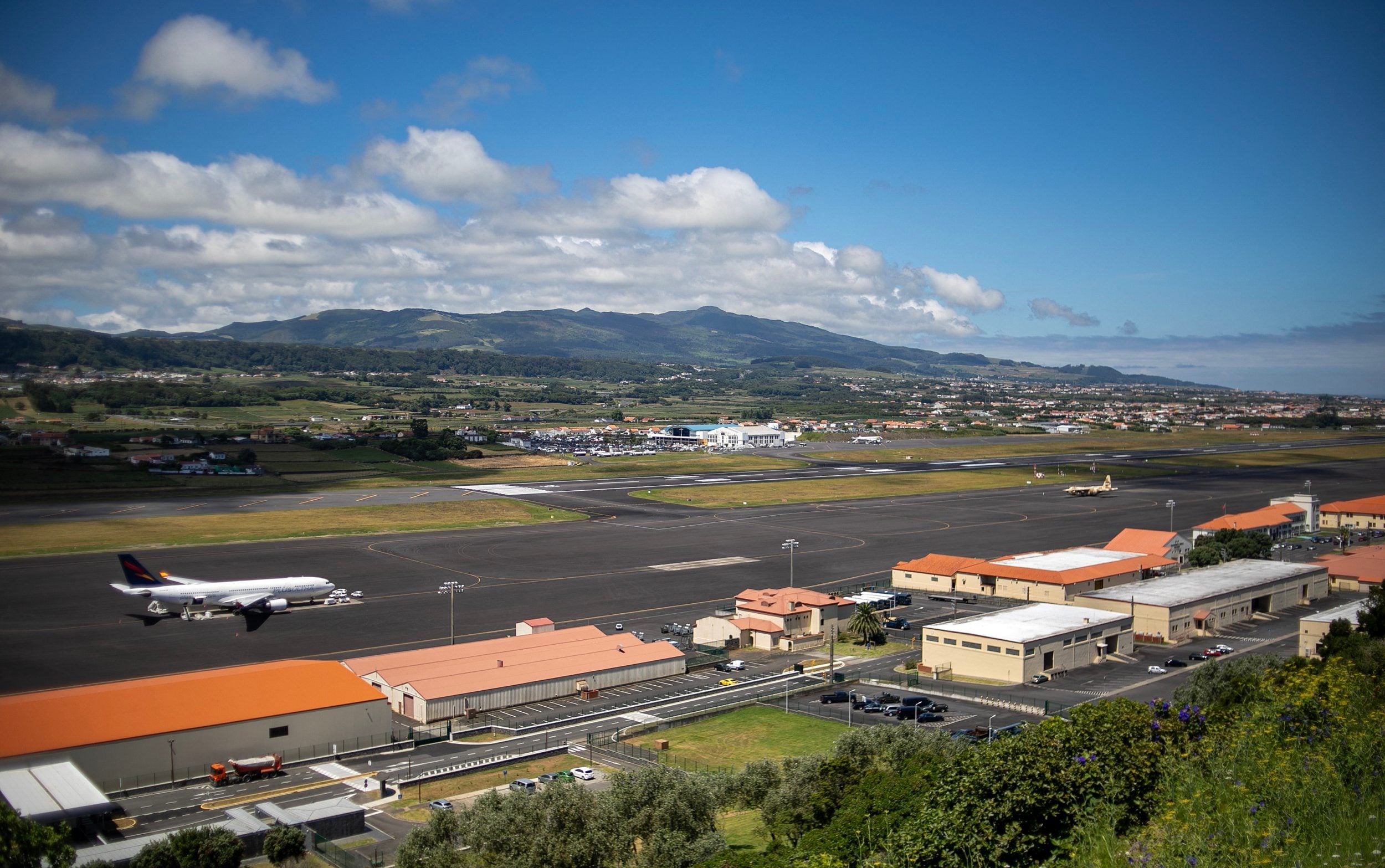
A recent SWISS service from Chicago to Zurich had to make an emergency landing on Terceira, one of the Azores islands - RUI SOARES/AFP via Getty
A trip to the Azores can be just the ticket – though this does tend to hinge on it being your planned destination. That wasn’t the case for the 222 passengers aboard SWISS LX9, whose flight from Chicago to Zurich last week had to make an emergency landing on Terceira, one of the Azores islands, after a chemical smell was reported onboard.
Diversion landings aren’t everyday occurrences, as such, but preparing for emergencies in the sky still plays a crucial part in aviation safety.
This does, however, beg the obvious question: if a plane needs to get to the closest airport pronto, where’s the most inconvenient place in the world for it to be? We’ve found the answer to this, and every other question you might have about the fascinating world of the diverted flight.
Why do planes make diversion landings?
Diversion landings can happen for all sorts of reasons, including poor weather, medical emergencies or security fears. Though mechanical problems, specifically technical issues with a plane’s engines, are the most common.
In modern aviation, most planes have two engines (some large jets even have four), so a single failure isn’t necessarily a matter of life and death (most planes can even glide for surprisingly long periods without any working engines at all).

The SWISS flight was diverted after a chemical smell was reported onboard - Panther Media Global / Alamy Stock Photo
Nevertheless, losing an engine is a serious problem, and therefore serves as the basis for each plane’s extended-range twin-engine operational performance standards (ETOPS) rating: the maximum number of minutes for which it can safely fly on a single working engine, and therefore the amount of time it’s permitted to be from the nearest airport.
On a typical single-aisle jet such as a Boeing 737 MAX, for example, this is usually around 180 minutes (three hours). It’s one of the reasons that a typical flight path from, say, London to New York will follow the “Great Circle route” across the North Atlantic Ocean, passing just south of Iceland and near southern Greenland, rather than going in a straight line between the two.
There is a big difference between how long a plane could fly on a single engine and how long it should. For understandable reasons, aviation safety protocols prefer to err on the side of caution, meaning that in reality, pilots will always liaise with Air Traffic Control to make a diversion landing as soon as possible.
Where does a plane land when something goes wrong?
As a rule of thumb, the general approach is to find the closest suitable airport.
If the issue occurs early on in the flight, that might involve returning to the departure airport – like the American Airlines flight from Heathrow to North Carolina that was forced to return to London after the plane was reportedly struck by lightning some 30 minutes into the journey back in June.
In other cases, the plane will land at a diversion airport somewhere along the route. That becomes slightly trickier when you’re flying over a large ocean, rather than a built-up landmass. In those cases, pilots will typically plan their flight path with emergency airports in mind.
Which are the main diversion airports?
While any airport can serve as a diversion point, the basics of geography mean that some are more likely to be used than others. One particular airport has become well known for its role in emergency diversions: Gander International Airport, in Newfoundland, near the eastern tip of Canada, which has long been a vital diversion point for some of the world’s busiest flight routes, including in cases of bad weather.

The airport’s most notable role, however, was the part it played in Operation Yellow Ribbon, an unprecedented event in which dozens of flights were diverted in the immediate aftermath of 9/11. The generosity of the locals, and the lifelong friendships formed, has been immortalised in the hit musical Come From Away.
Advertisement
Given the large volumes of aviation traffic heading over the Atlantic at any time, there are several other airports which have handled a disproportionate number of diversions. They include Shannon on the west coast of Ireland, Keflavik in Iceland, and the various smaller airports dotted throughout the Portuguese Azores.
Where are the worst places for a plane to declare an emergency landing?
While it handles less aviation traffic than its smaller neighbour, the Pacific Ocean is generally regarded as much more isolated in terms of potential diversion airports.
This means that while some jetliners – the Boeing 787 Dreamliner, for example, and Airbus A350, which both have high ETOPS ratings of up to 370 minutes (more than six hours) – are able to follow efficient, direct paths across the middle of the Pacific, those with lower ETOPS ratings must follow routes which take them closer to tiny islands with airports.

These are often islands with military bases deep in the Pacific. Last year, a United Airlines long-haul flight heading from Sydney to San Francisco made a diversion to the tiny island nation of Samoa, after a passenger experienced a medical emergency.
Flights between the US West Coast and Hawaii face similar issues. Back in 1989, a Trans World Airlines commercial flight experienced an extremely dramatic fuel leak while flying from Los Angeles to Honolulu. On this occasion, the flight was able to make a safe landing at Hilo, a much smaller airport on the eastern tip of the Hawaiian islands.
Perhaps the most notorious isolated route (in terms of diversion airports) served by a major airline is Qantas’s flight between Sydney and Santiago, the capital of Chile. Given that tiny Easter Island can only handle one plane at any time, Chilean air traffic control maintains tight restrictions ensuring that only one plane at a time is in range of the potential diversion spot.
What about landing in hostile territory?
In theory, it shouldn’t make any difference. International aviation safety rules hold that a commercial plane should be able to make an emergency landing wherever it is safe to do so.
In reality, the picture is slightly more nuanced. For a start, the presence of no-fly zones or regional restrictions means that most Western planes aren’t going to fly over places such as Iran and Russia in the first place.
Even so, it isn’t entirely unknown for planes to make diversion landings in unlikely places. Last month, a Hainan Airlines flight from Beijing to Manchester was forced to make an emergency landing in Krasnoyarsk in Siberia because of a technical issue. As a China-based airline, the carrier was also cleared to be flying in Russian airspace.
Back in 2018, a Norwegian Boeing 737 MAX flying between Dubai and Oslo had to make an emergency diversion to an airport in Iran. Four years earlier, a Turkish Airlines flight carrying a number of Israeli passengers (who would normally be banned from entering Iran) made a two-hour pitstop in Tehran because of a medical issue.
The one exception? That’d be North Korea, whose totalitarian government has threatened to shoot down planes in its airspace, ostensibly because it suspects them of carrying out reconnaissance work.
Fortunately, the inland positioning of Pyongyang airport makes it highly unlikely that it would ever be needed as a diversion, given that Seoul would usually be closer – and rather more welcoming.
Try full access to The Telegraph free today. Unlock their award-winning website and essential news app, plus useful tools and expert guides for your money, health and holidays.
Source: “AOL Breaking”
